
Sun City, AZ
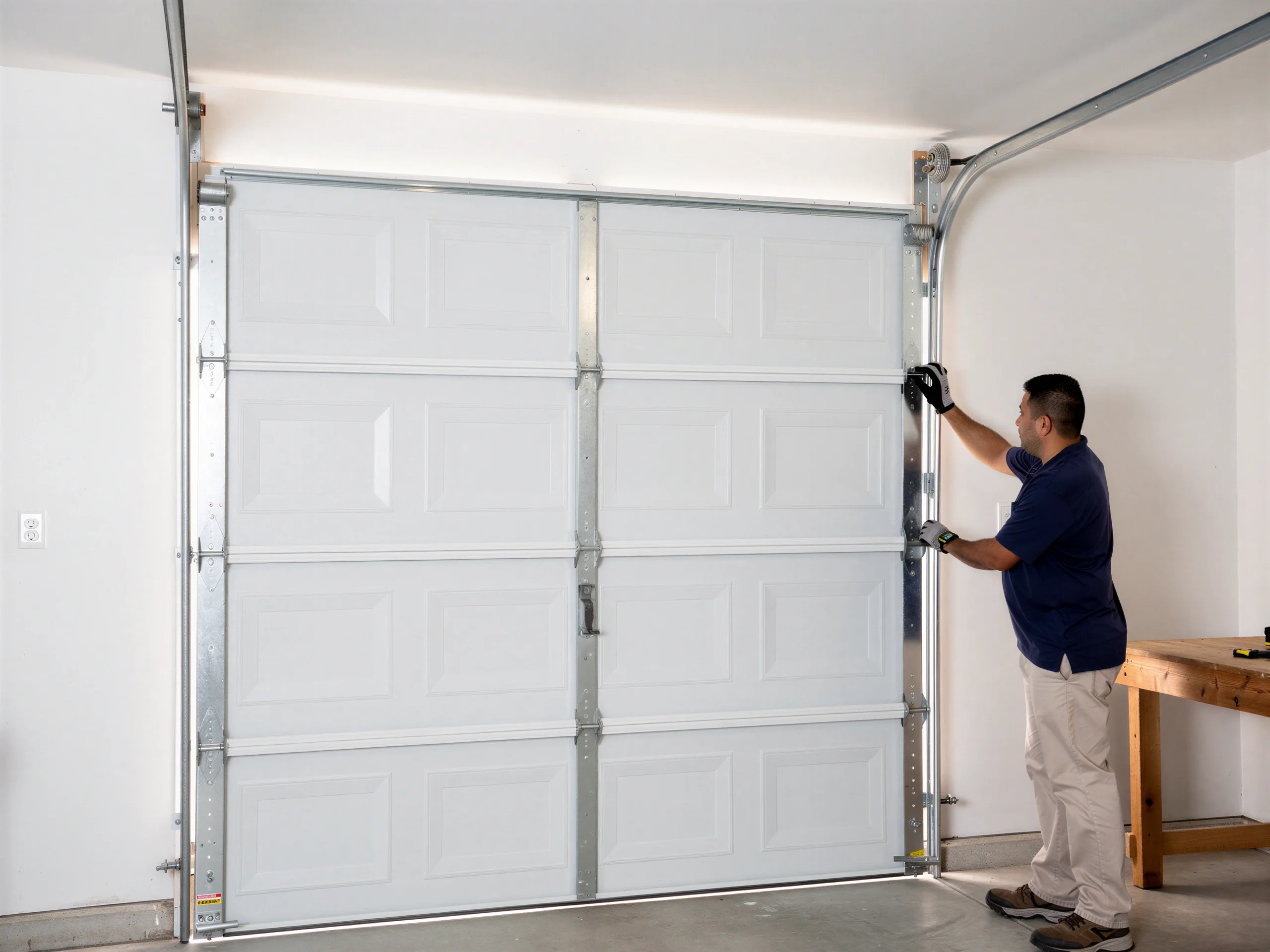
Garage Door Installation for Sun City Homes
Planning a garage door installation in Sun City, AZ? See why 1979-2005 homes and severe summer heat change what install actually means here, and what to check first.
Popular Services
The Cost of This Job
We're not going to put a number on this page that doesn't match what you'll actually see on your invoice. Installation cost swings on a few things we have to see in person: door width, whether you want insulated steel or a lighter uninsulated panel, what shape your track and header are in, and whether the opener needs to come out with the door.
Single versus double door pricing
A single door on a 2000s-era house with standard framing is a different job than a double door where the original track was custom-fit to an odd header height. Here's the honest limitation: we don't quote a firm price over the phone without seeing the opening or at least a few photos and measurements.
Sight-unseen estimates risk
Anyone who gives you a number sight unseen is guessing, and guesses on install jobs run both directions - sometimes low, sometimes a surprise once the old track comes down and the header's not square.
Straight swap cost expectations
What we can tell you without seeing your garage: in a service area where most houses were built between 1979 and 2005, with the median landing around 2001, a straight swap - same size, same track position - tends to go faster and cost less than a job where we're also correcting an opening that was never quite right to begin with.
Why This Fails Locally
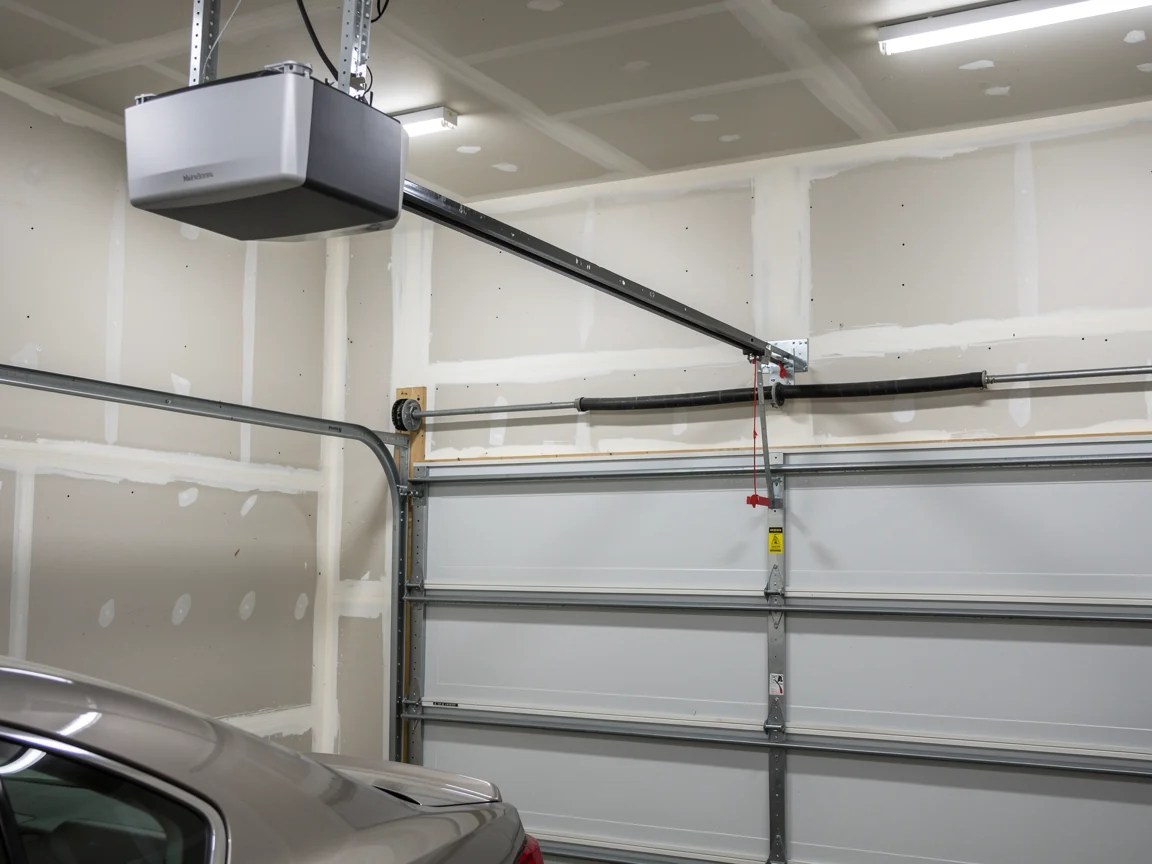
Most of the housing stock around Sun City dates to that same 1979-2005 window, with a lot of it clustered in the 2000s build era across the seven named areas nearby. That matters for one reason: doors and openers installed when a house was built are now anywhere from twenty to over forty years old, and they were built to the standards and materials of that decade, not today's.
The bigger factor is the climate. This area sits in a severe heat band, and a closed garage with a steel door on it runs hotter than the outside air by a wide margin for months at a time. That heat is what actually does the damage - it dries out nylon rollers and idler bearings until they crack, it breaks down the foam core bonded to older insulated panels so they delaminate at the seams, and it works torsion springs through a wider daily temperature swing than springs in a milder climate ever see.
So the failure here isn't really the door getting old. It's a door built for a cooler climate cycle spending two decades in a hot one. By the time a homeowner calls about a new installation, it's usually because patching the old setup has stopped being worth it.
Can You Do This Yourself
Swapping a full garage door system yourself is not the same job as changing a light fixture, and we'll say plainly where the line is.
Rollers and weatherstrip DIY
If you're replacing hardware like a roller or a weatherstrip on an otherwise sound door, that's within reach for someone comfortable with tools. A full door install is a different category - you're working with a torsion spring under load that can break a wrist or worse if it lets go while you're near it, and you're setting a track plumb against a header that, on a lot of these older builds, isn't perfectly square to begin with.
Spring wind parts mismatch
There's also a parts-matching problem specific to this area's housing age. A door built around 2001 may use a track width, drum size, or spring wind that's no longer the standard stocked size. Ordering the wrong spring online and finding that out mid-install is a bad place to be.
Opener swap is forgiving
If you want to do some of it yourself, the opener swap is the more forgiving piece - it bolts to an existing track and header bracket. The door itself, the track, and the spring conversion are where we'd tell most owners to call someone, not out of sales pitch but because the failure mode there is a hospital trip, not a redo.
The Symptom
The call we hear most before an install job isn't "my door broke. It's a door that's gotten slow, that binds about a third of the way up, or that the opener strains against and sometimes reverses on its own.
Heat-driven track expansion
That pattern tracks almost exactly with what severe heat does to an older door over years: the steel track expands slightly in the heat of the day, cables stretch a hair more than they used to, and a spring that was wound correctly in 2001 is now carrying a slightly different load than it was set for.
Foam breakdown and sagging corners
Another version shows up as a door that looks fine standing still but sags visibly at the bottom corners when it's open. That's usually a panel whose internal foam has broken down under years of garage heat, so the steel skin is no longer getting the support it was built with.
Why patching fails for sag
Patching that panel doesn't fix the sag; the foam underneath is still gone. If what you're seeing is a door that's slow, uneven, or visibly bowing rather than one that's simply stuck, that's less often a quick repair and more often the sign that the door itself has reached the end of what it can do here.
Questions
Common questions
How old does my door need to be before replacement makes more sense than repair?
There's no fixed age cutoff, but a lot of homes here were built between 1979 and 2005, so originals are now two to four decades old. If the panel foam has broken down or the track is pitted and warped from years of heat, repair parts often cost close to what a new door section runs, and you're left with an old door around the new piece.
Will a new door hold up better against the heat here than my old one?
A newer door with intact insulation and updated hardware handles the daily heat cycle better than one with degraded foam or brittle plastic rollers, simply because the materials haven't spent twenty-plus summers breaking down yet. It won't stop heat entirely, but it won't be the weak point it's become.
Can you match the track and spring to my 2001-era house without a special order?
Sometimes. A lot of the 2000s-era builds around here use common sizing, but some use a track width or drum that's no longer a stock part. We check this on site before quoting, because ordering the wrong spring wind is the kind of mistake you don't want to discover mid-install.
Do you install on both single and double doors?
Yes, both are routine installation jobs for us. The main difference is the header and track setup - double doors carry more load, so the spring sizing and mounting hardware are heavier, which is part of why we need to see the opening before quoting a price.
Explore more
Explore More Services In Sun City, AZ
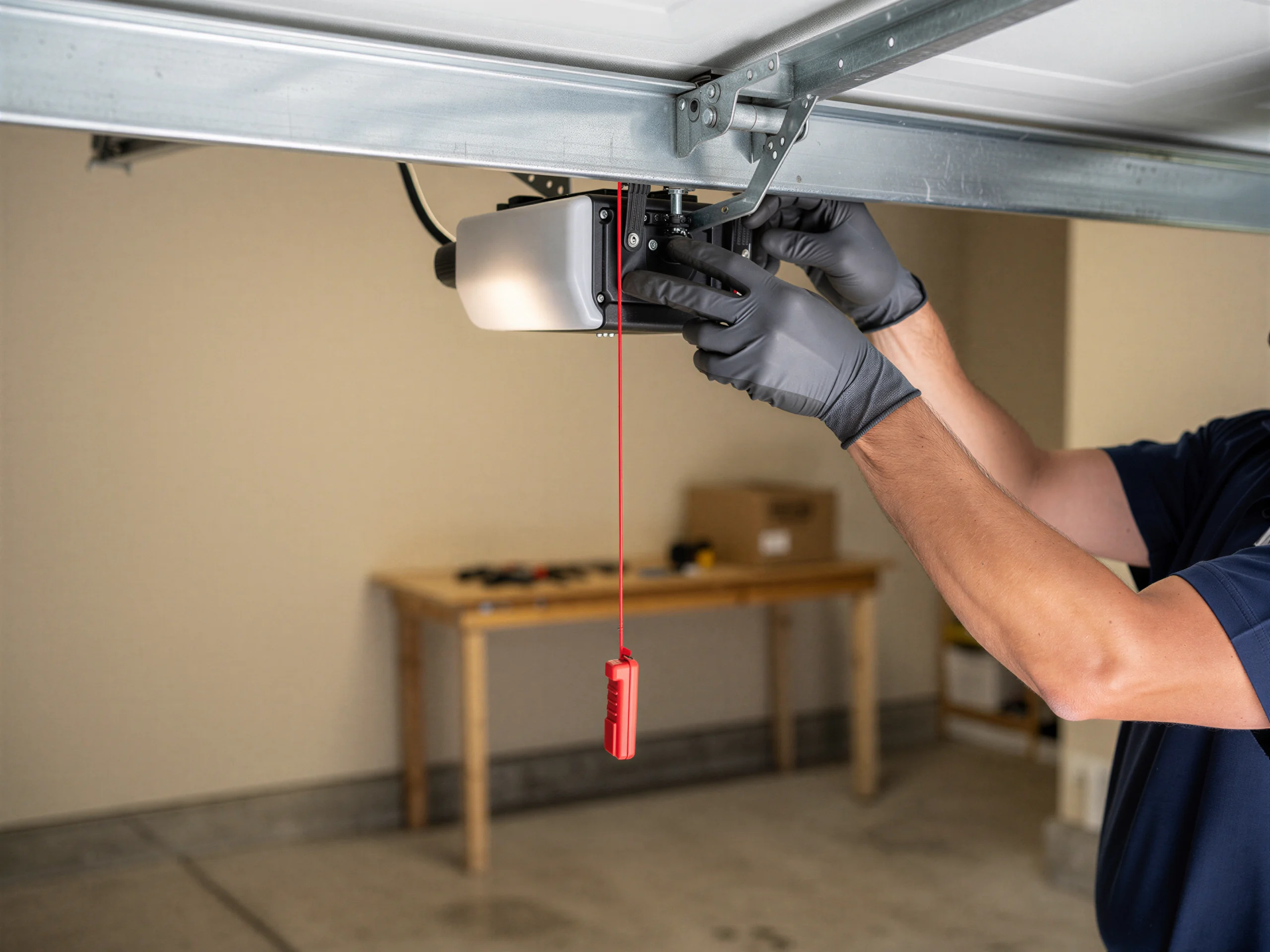
Garage Door Opener Repair for Sun City Homes
Opener repair for Sun City homes built 1979-2005, where heat-stressed gears and sun-baked circuit boards fail years before the door itself does. Learn more →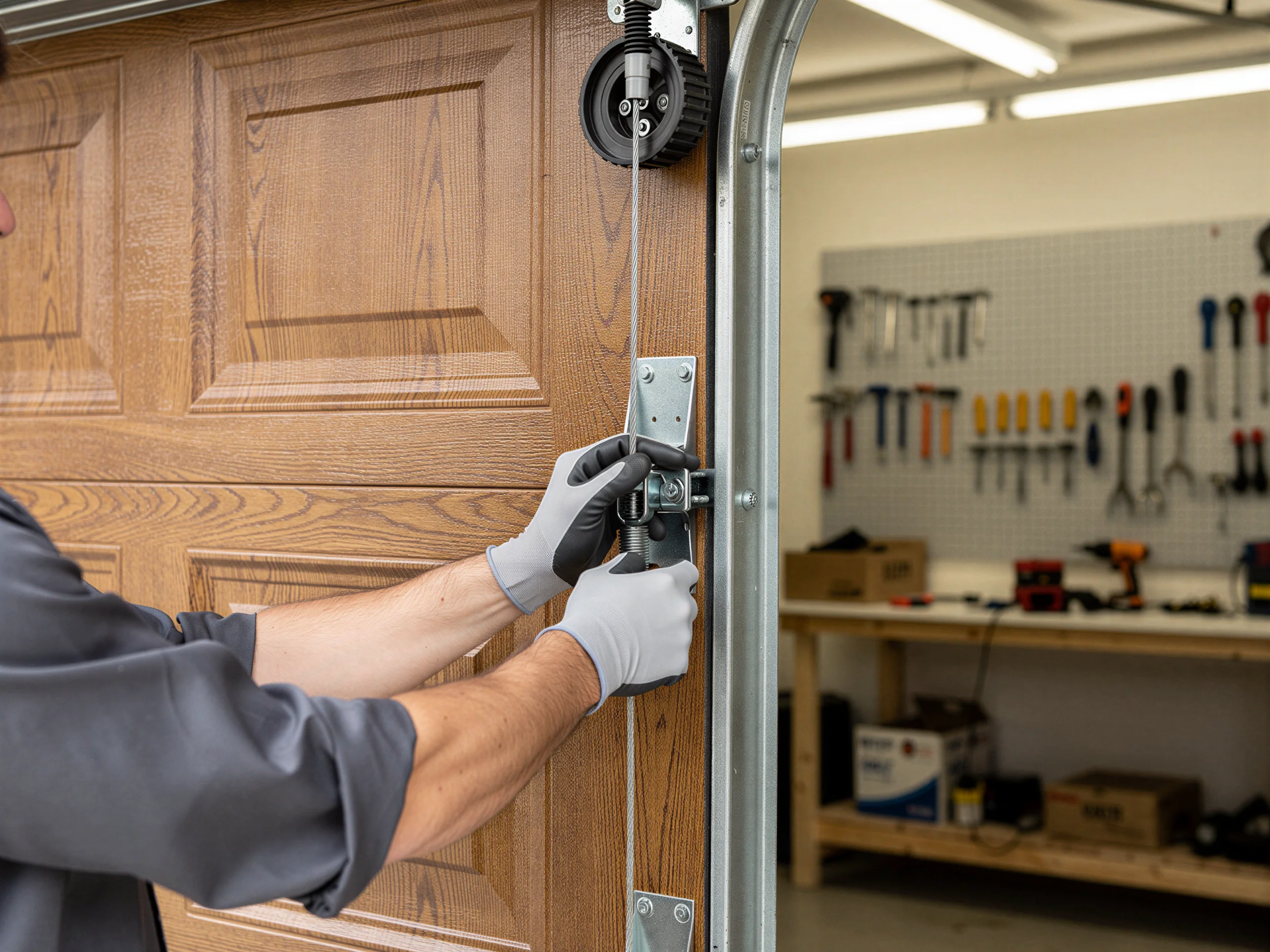
Garage Door Cable Repair for Sun City Homes
Broken or frayed garage door cables are common in Sun City's 1979-2005 housing stock and severe summer heat. Learn more →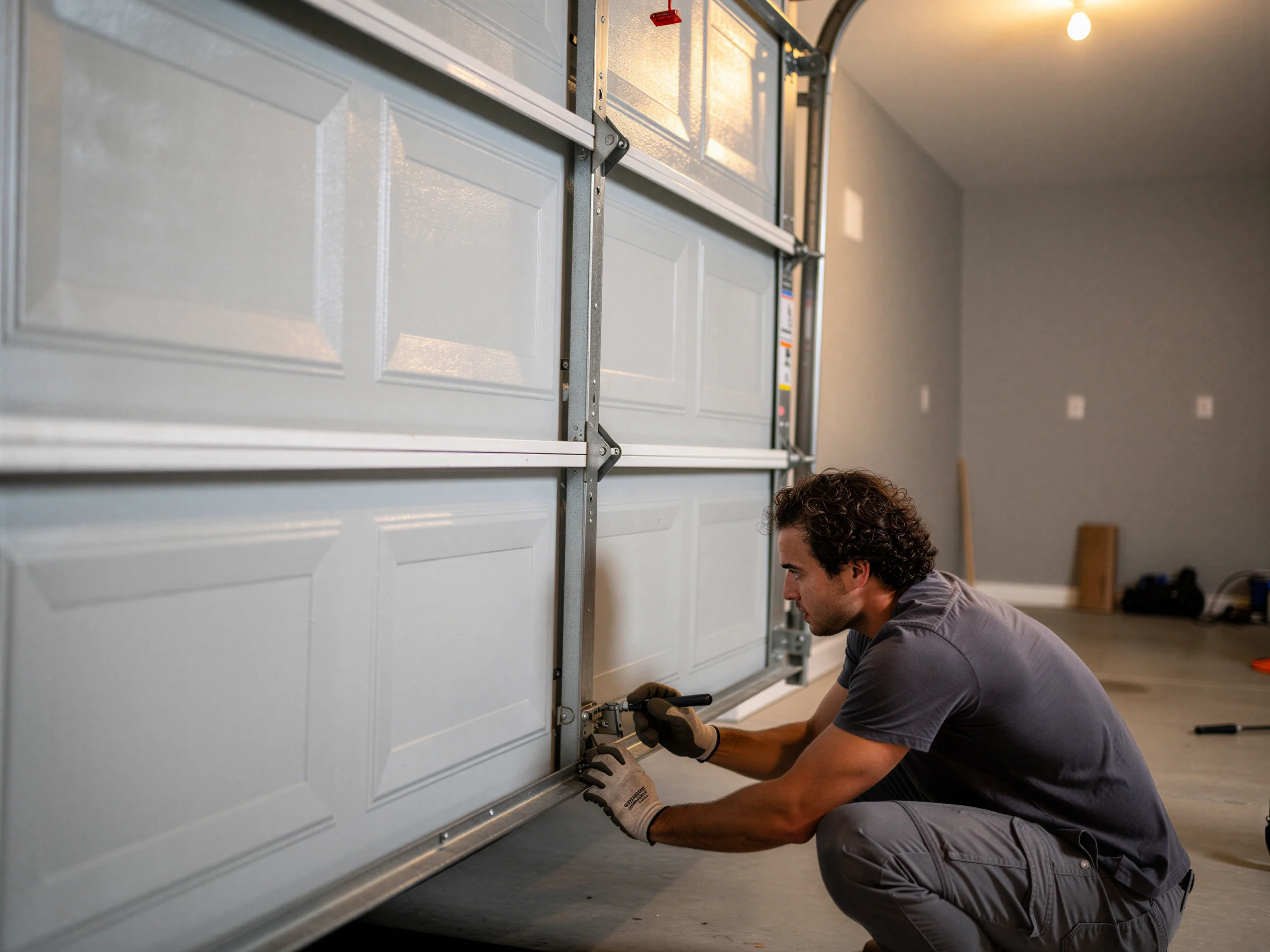
Garage Door Repair for Sun City's 1980s and 90s Homes
Sun City homes built 1979-2005 share the same aging springs and openers. Learn more →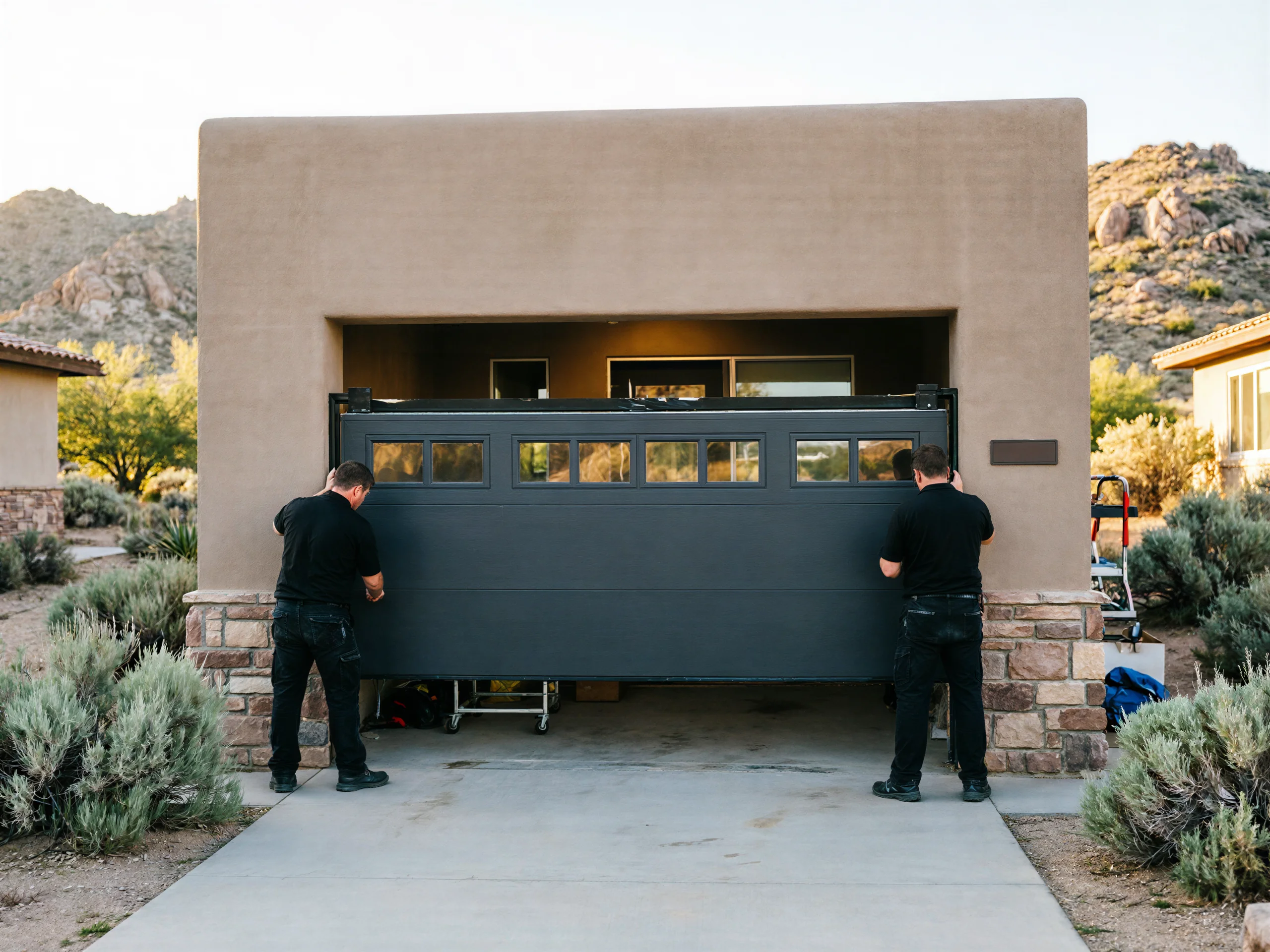
Garage Door Panel Replacement for Sun City Homes
Panel replacement for Sun City homes built mostly 1979-2005, where sun-warped steel and dented sections are common. Learn more →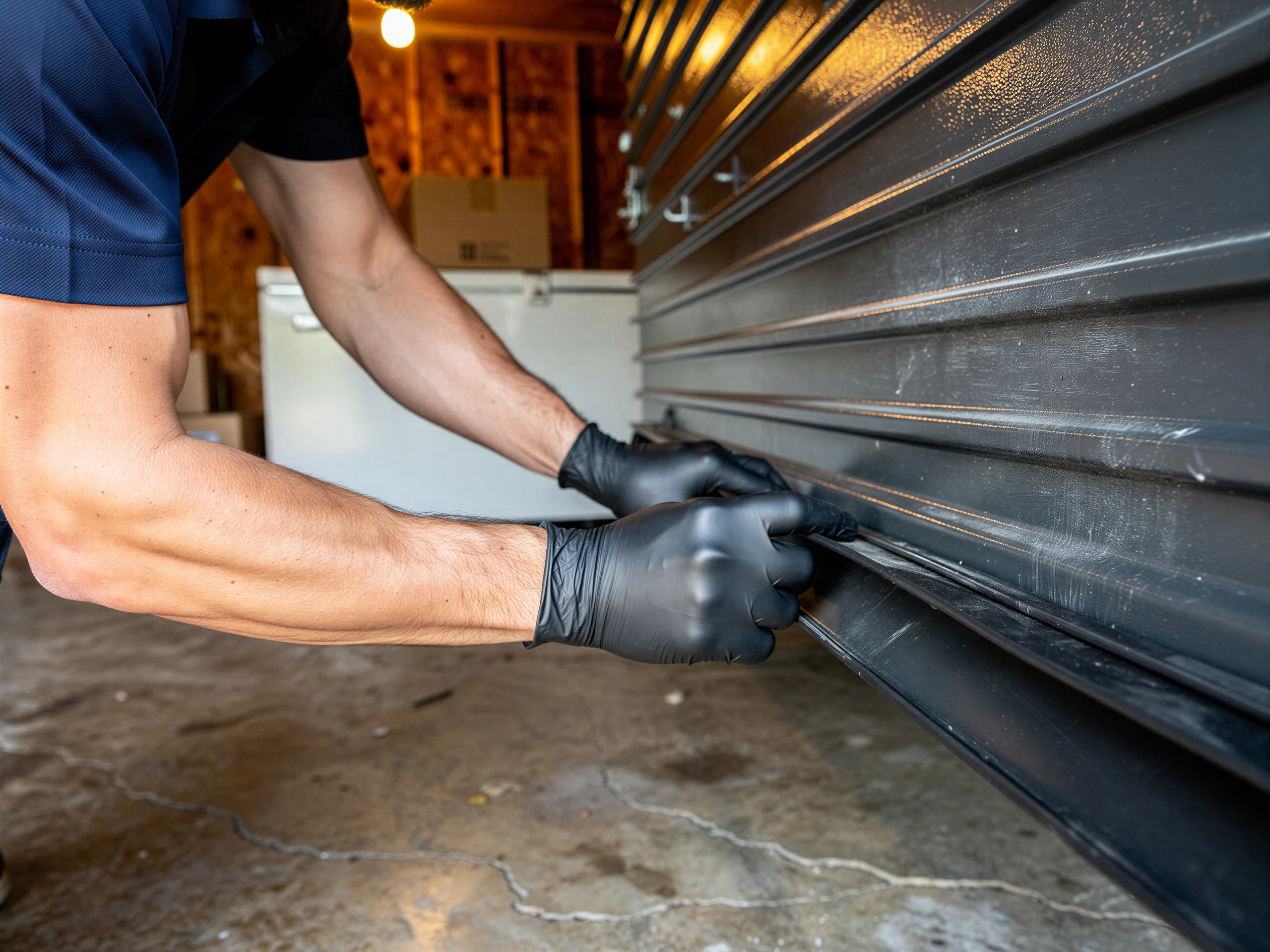
Garage Door Maintenance for Sun City's Desert-Built Doors
Garage door maintenance built around Sun City's 1980s-2000s housing stock and severe desert heat. Learn more →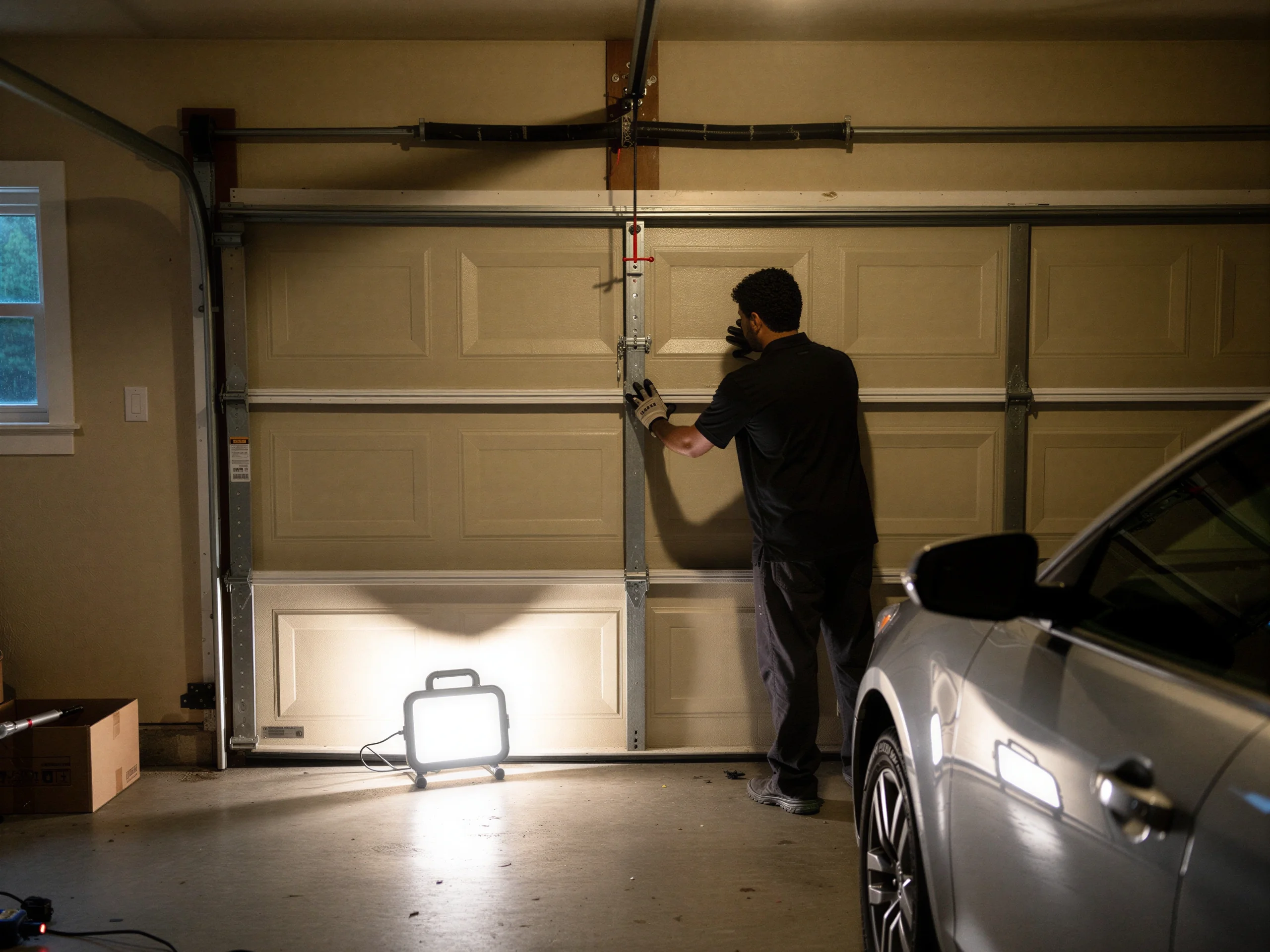
Emergency Garage Door Repair Across Sun City
Broken spring or dead opener at 9pm? Learn more →Ready when you are
Need a garage door sorted in Sun City?
Sun City Garage Door Pros repairs and installs garage doors, springs and openers in Sun City, AZ and the surrounding area.